
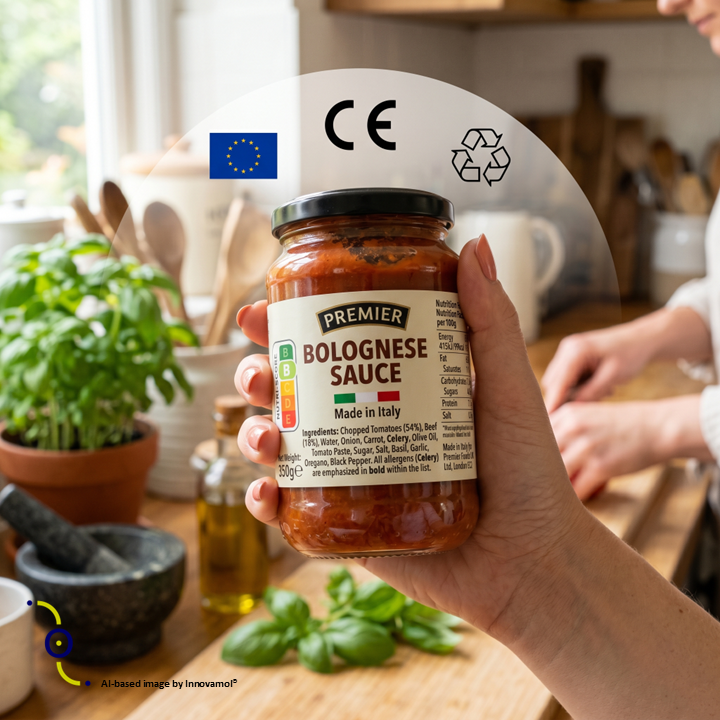
Food and feed labelling has become a central instrument in modern agri-food systems, reflecting a shift from simple product identification towards a broader framework of consumer protection, transparency and regulatory oversight. In the European Union, however, food labelling and feed labelling must be understood as two distinct but complementary regulatory areas. Food labelling for consumers is largely anchored in Regulation (EU) No 1169/2011 (https://eur-lex.europa.eu/eli/reg/2011/1169/oj/eng) on the provision of food information to consumers, whereas feed labelling is governed by a separate framework, notably Regulation (EC) No 767/2009 (https://eur-lex.europa.eu/eli/reg/2009/767/oj/eng) on the placing on the market and use of feed. This distinction is important because food labelling is primarily designed to protect and inform consumers, while feed labelling is mainly addressed to farmers, feed business operators and other professional users, with the objective of ensuring safe use, correct composition, traceability and protection of animal and human health along the food chain. Regulation (EU) No 1169/2011 established a harmonised approach across Member States and has applied since 2014, with the mandatory nutrition declaration applying since 2016. The regulation aims to ensure a high level of consumer protection while facilitating the smooth functioning of the internal market, by setting out general principles that prohibit misleading information and by defining mandatory information requirements (https://food.ec.europa.eu/food-safety/labelling-and-nutrition/food-information-consumers-legislation_en).
Under this framework, food business operators are required to provide a consistent set of information on prepacked products, including the name of the food, the list of ingredients with clear identification of allergens, the net quantity, the date of minimum durability or the ‘use by’ date, where applicable, storage conditions, and the identity of the operator responsible for the product. Since 2016, nutrition declaration has also been mandatory, requiring the indication of energy value and key nutrients such as fat, carbohydrates, sugars, protein and salt, typically expressed per 100 grams or millilitres (https://food.ec.europa.eu/food-safety/labelling-and-nutrition/food-information-consumers-legislation/nutrition-labelling_en). These requirements are designed not only to inform but also to standardise information across the European market, thereby reducing asymmetries between producers and consumers.
Over time, the regulatory framework has expanded in response to increasing societal and scientific concerns. Allergen labelling rules have been strengthened to improve readability and accessibility for individuals with food allergies or intolerances, requiring allergens to be emphasised within ingredient lists (https://food.ec.europa.eu/food-safety/labelling-and-nutrition/food-information-consumers-legislation/guidance-documents_en). Similarly, origin labelling has been progressively extended, particularly for certain categories such as fresh meat and cases where the origin of a primary ingredient differs from that of the final product, reflecting growing consumer interest in traceability and provenance (https://eur-lex.europa.eu/EN/legal-content/summary/labelling-of-foodstuffs.html). Labelling requirements for genetically modified organisms further illustrate the EU’s precautionary transparency-oriented approach, with mandatory traceability and labelling requirements for GM food and feed, including disclosure where authorised GM material is present above the relevant threshold, generally 0.9% when its presence is adventitious or technically unavoidable (https://food.ec.europa.eu/plants/genetically-modified-organisms/traceability-and-labelling_en).
While food labelling is primarily directed at consumers, feed labelling operates within a complementary regulatory sphere that underpins the safety of the entire food chain. Regulation (EC) No 767/2009 governs the placing on the market and use of feed, establishing requirements related to composition, safe use, traceability, labelling, packaging and presentation. Unlike Regulation (EU) No 1169/2011, which focuses on information provided to consumers about food, Regulation (EC) No 767/2009 focuses on feed materials and compound feeds used for food-producing and non-food-producing animals. Its purpose is to ensure that feed is accurately described, safely used and traceable, so that farmers and feed operators can make informed professional decisions. The objective is to ensure that feed materials and compound feeds are properly described and labelled so that farmers and other operators can make informed decisions, ultimately safeguarding animal health and, indirectly, human health. The connection between feed and food labelling becomes particularly relevant in areas such as contaminants, additives and genetically modified inputs, where traceability across the chain is essential.
Despite the high level of harmonisation achieved at EU level, national approaches still introduce a degree of variability, particularly in the presentation of voluntary information. Some Member States have promoted front-of-pack labelling schemes intended to simplify nutritional information for consumers. For example, France has officially supported the voluntary Nutri-Score system, where a five-colour nutrition label, ranging from A to E and from dark green to orange/red according to the nutritional profile of the product, helps consumers make healthier choices at a glance. This creates a layered system in which harmonised rules are complemented by additional tools aimed at influencing consumer behaviour.
Looking beyond Europe, food labelling frameworks exhibit both convergence and divergence. The United Kingdom has promoted a voluntary multiple traffic-light front-of-pack nutrition labelling scheme, while the United States relies primarily on the mandatory Nutrition Facts label and has proposed, but not yet implemented as a comparable colour-coded traffic-light system, a front-of-package “Nutrition Info” box. These approaches reflect similar objectives of transparency and consumer awareness, albeit within different regulatory cultures (https://www.fda.gov/food/nutrition-education-resources-materials/new-nutrition-facts-label) (https://www.nhs.uk/live-well/eat-well/food-guidelines-and-food-labels/how-to-read-food-labels/). Other jurisdictions have adopted more interventionist models. For instance, Chile has introduced mandatory front-of-pack warning labels for products high in sugars, sodium, saturated fats and/or calories, signalling a stronger emphasis on public health outcomes and behavioural change (https://healthpolicy-watch.news/chile-provides-a-convincing-case-for-mandatory-warning-labels-on-processed-food/). Comparable developments in countries such as Brazil indicate a broader global trend towards clearer and more accessible nutritional communication, including mandatory front-of-pack nutrition labelling using a magnifying-glass symbol to identify foods high in added sugars, saturated fats or sodium (https://www.fdli.org/2023/11/food-labeling-regulation-an-overview-from-brazil-and-latin-america/).
Although much of the core legislative framework, particularly Regulation (EU) No 1169/2011, has been in place for over a decade, food and feed labelling has returned to the forefront of policy and industry discussions. This renewed attention reflects a growing misalignment between established regulatory provisions and rapidly evolving societal expectations, technological capabilities and market dynamics. Consumers are increasingly demanding clearer, more accessible and more meaningful information, extending beyond traditional aspects of nutrition and safety to include sustainability, origin and ethical considerations. At the same time, ongoing policy debates at EU level on front-of-pack nutrition labelling harmonisation, environmental claims, greenwashing prevention and the regulation of novel and plant-based foods illustrate that, despite the maturity of the existing framework, its interpretation and potential revision remain highly dynamic (https://food.ec.europa.eu/food-safety/labelling-and-nutrition_en). In parallel, digital technologies such as QR codes and smart labelling systems are reshaping how information can be communicated, potentially overcoming physical constraints of packaging while raising new questions around standardisation, accessibility and regulatory oversight.
These developments highlight how labelling is evolving beyond a purely compliance-driven exercise into a strategic interface between regulation, innovation and societal expectations. Emerging areas such as environmental and sustainability claims, which are increasingly addressed through horizontal consumer-protection rules and evolving EU initiatives on green claims, raise concerns about consistency and the risk of misleading information, while the rapid expansion of plant-based and novel foods challenges existing naming conventions and consumer understanding. Within this context, the European framework provides a robust and harmonised foundation, yet it must continue to adapt to scientific advances, shifting consumer priorities and global trade dynamics. For stakeholders across the agri-food and feed sectors, navigating this evolving landscape requires not only regulatory compliance but also a proactive and strategic approach to labelling as a tool for building trust, ensuring transparency and maintaining competitiveness in an increasingly complex food system.
To support companies, institutions and stakeholders in this evolving landscape, Innovamol provides Flashmol Monitoring, a daily scientific and regulatory monitoring service dedicated to food and feed topics, including Food Labelling. The service helps organisations follow emerging regulatory updates, policy signals, scientific developments, market-relevant trends and innovation areas that may affect labelling strategies, compliance requirements and decision-making. Contact Us to learn more about Flashmol MonitoringÒ and to discuss how a dedicated monitoring workflow can support your organisation.
“What we eat is a reflection of the world we live in” – Carlo Petrini (founder of Slow Food)