
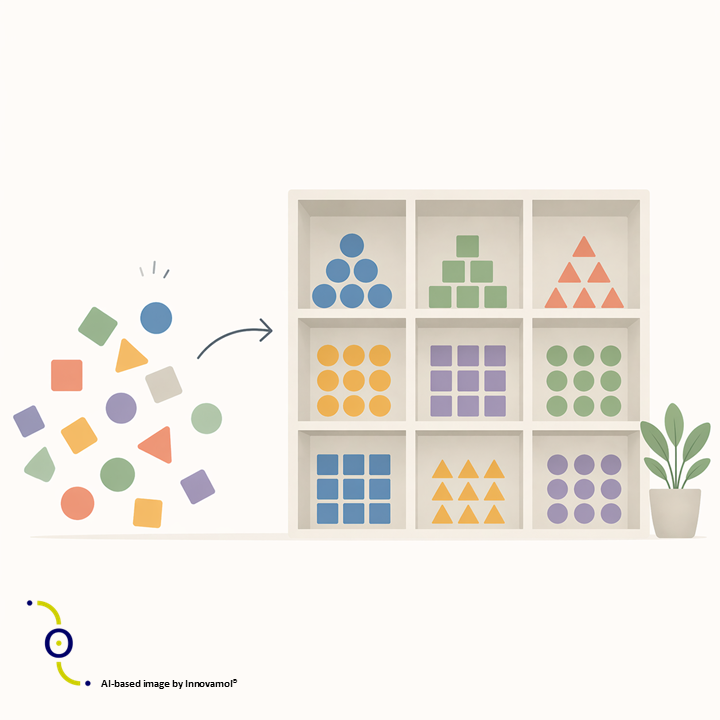
In an era where data generation is accelerating at a very fast rate, it is worth asking whether the scientific and regulatory communities are making full use of the knowledge already available. Although read-across and data reuse have long been advocated as efficient, ethical and scientifically robust approaches, their practical application remains relatively limited, including in the food and feed sectors (https://efsa.onlinelibrary.wiley.com/doi/10.2903/j.efsa.2025.9586). This raises a fundamental question about whether we are underusing existing knowledge and, if so, why.
Read-across is grounded in the idea that similar substances are likely to exhibit similar properties. When applied correctly, it allows data from one substance to inform the assessment of a similar one, reducing the need for additional testing. This concept is embedded in major regulatory frameworks, particularly within chemical safety legislation, where it is recognised as a valid approach to fill data gaps (https://op.europa.eu/en/publication-detail/-/publication/841c5a3a-2981-11e7-ab65-01aa75ed71a1/language-en). At the same time, data reuse extends beyond structural similarity and includes the integration of historical studies, publicly available datasets, and results generated across different sectors.
Despite its clear advantages, the implementation of read-across is often perceived as complex and uncertain. One of the main barriers lies in the level of justification required. Regulatory acceptance depends heavily on demonstrating scientific robustness, which in turn requires detailed documentation of similarity, mechanistic plausibility, and uncertainty analysis. For some organisations, generating new data may be perceived as more straightforward than committing the time and specialist expertise required to develop a robust read-across justification. This creates a paradox in which generating additional data becomes the default option, even when relevant information already exists.
Another challenge relates to data accessibility and interoperability. While large volumes of data are technically available, they are frequently fragmented across databases, reports, and proprietary systems. Differences in formats, standards, and metadata quality can make integration difficult. As a result, potentially valuable information remains underutilised simply because it is not easily discoverable or usable. Initiatives promoting FAIR data principles (Findable, Accessible, Interoperable, and Reusable), aim to address these issues, but their adoption is still uneven across sectors.
There is also a cultural dimension to consider. Scientific practice has traditionally placed a strong emphasis on generating new experimental evidence. While this is essential for innovation, it can inadvertently undervalue the reuse of existing data. In some cases, there may be concerns about data quality, relevance, or ownership, which discourage reuse. However, advances in computational methods, including machine learning and cheminformatics, are increasingly enabling the extraction of meaningful insights from heterogeneous datasets, reinforcing the case for more systematic reuse (10.1038/sdata.2016.18).
From an ethical perspective, the underuse of existing knowledge is particularly significant in areas involving animal testing. Read-across and data reuse can substantially reduce the need for new experiments, aligning with the principles of replacement, reduction, and refinement. Regulatory frameworks explicitly encourage these approaches, yet their full potential is not always realised in practice (https://pmc.ncbi.nlm.nih.gov/articles/PMC9201788/). Strengthening confidence in alternative methods and improving guidance on their application could help bridge this gap.
Economic considerations also play a role. Generating new data is costly, both in terms of financial resources and time. Efficient use of existing information can accelerate decision making and reduce development timelines. For industries operating under tight regulatory deadlines, the ability to leverage prior knowledge can provide a significant competitive advantage. However, this requires investment in data management systems, expertise, and cross disciplinary collaboration.
Looking ahead, there are several ways to facilitate the usage of read-across methodologies. Enhancing data sharing infrastructures, harmonising standards, and promoting transparency are essential steps. Equally important is the development of clear and practical guidance for read-across, supported by case studies that demonstrate successful applications. Training and capacity building will be crucial to ensure that scientists and regulators are equipped to apply these approaches with confidence. Ultimately, the question is not whether sufficient data exist, but whether we are organised and willing to use them effectively. Read-across and data reuse offer a means to transform existing information into actionable knowledge. If fully embraced, they have the potential to make research and regulation more efficient, more ethical, and more sustainable. In this context, we at Innovamol, specialise in managing scientific data play a key role aiming to ensure that information is properly curated, structured, and organised so that it can be readily accessed and effectively reused.
“Knowledge is of no value unless you put it into practice” – Anton Chekhov