
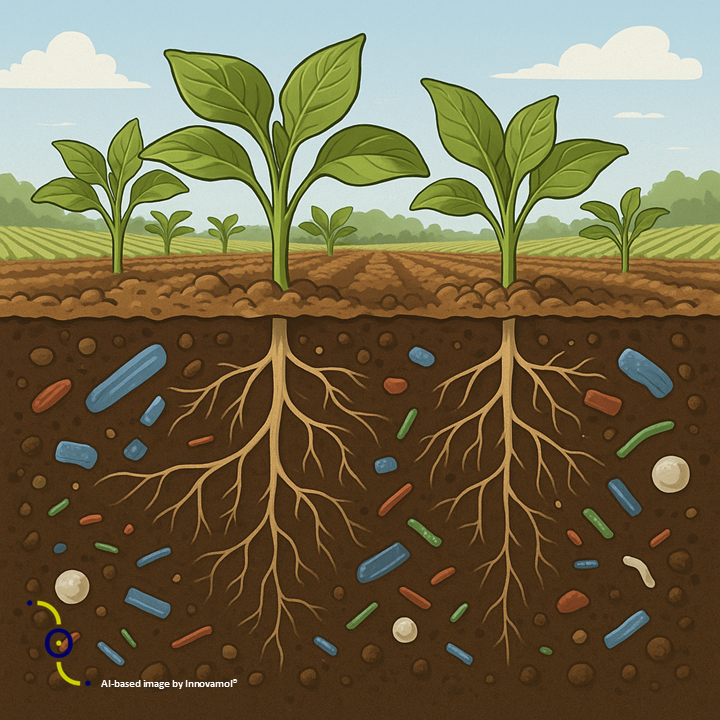
Plastic pollution is not just about oceans and packaging anymore. It is also showing up in farming soils, right where we grow our food. Research shows that agricultural soils may contain even more microplastics than the oceans. These small plastic particles, often invisible to the eye, are quietly building up at the base of our food system.
Plastic is used widely in agriculture. From plastic mulch sheets and coated fertilisers to packaging materials like films and containers, it helps protect crops, improve yields, and extend shelf life. But once these materials break down, they release tiny plastic particles into the soil or directly into our food. Some particles are absorbed by plant roots or eaten by livestock. Others are released into food from plastic containers, especially when exposed to heat or long storage. These plastics often (but hopefully less and less) come with harmful chemicals like bisphenol A, phthalates, or PFAS which are known endocrine disruptors (i.e,. substances that are capable of disrupting hormones in the body). In addition, agriculture is seeing a growing interest in nanotechnology-enabled pesticides and fertilisers, sometimes called “nanoagrochemicals,” a term used in regulatory contexts (including by ECHA) but not universally accepted.
This creates two main routes for plastic particles to enter our food. One starts in the environment, with plastics used on farms breaking down in the soil. The other comes from packaging materials, the so called FCMs (Food Contact Materials). Anyway, the result is the same: plastic particles and chemicals can move in our meals, and potential long-term risks to our health.
Scientists are still learning about the effects of these particles. Early studies suggest they can trigger inflammation, stress cells, and possibly even increase the risk of heart problems. In the environment, they can harm the balance of soil microbes, lower crop yields, and build up through food chains. But many of these effects are hard to measure, especially over time. And that makes it difficult to set clear safety rules. However, many progresses have been made. In particular, the EU recently began phasing in bans on certain microplastics and has created methods to measure them in drinking water. International organisation like the FAO and WHO are also discussing about how to tackle plastic pollution on a global scale.
Despite farming is still a grey area in regulation, with little agreement on how to measure risk from plastics in soil or food, several past and future research projects funded by the EU are now working on better tools to study and measure plastic pollution. These include looking at how plastic particles move through the environment, how they affect health, and what kinds of risks they might pose. The hope is that this data can help shape smarter policies. For instance, one idea gaining support is a step-by-step system. Areas that seem low risk could have basic checks, while more polluted zones would get more detailed testing. This would allow efforts to focus where they are most needed, without overwhelming regulators or farmers. At the same time, cutting back on the use of new plastic in farming could help stop the problem at its source.
So far, the tools and knowledge needed to make these changes are still being developed. But the problem is clear. If we want to protect our health and food supply, we need better ways to measure, manage, and reduce microplastic pollution in agriculture. Soil is not just ground; it is the foundation of our food system. Keeping it safe means rethinking how we use plastic, not just in packaging, but throughout the food chain.
This work was carried out under a contract with the European Food Safety Authority (EFSA), EFSA/2023/OP/0007 (OC/EFSA/ENREL/2023/01). The opinions expressed are solely those of the contractor and do not represent the official position of EFSA. If you are interested in this kind of works or topics get in touch with us!
“We won’t have a society if we destroy the environment” – Margaret Mead, cultural anthropologist