
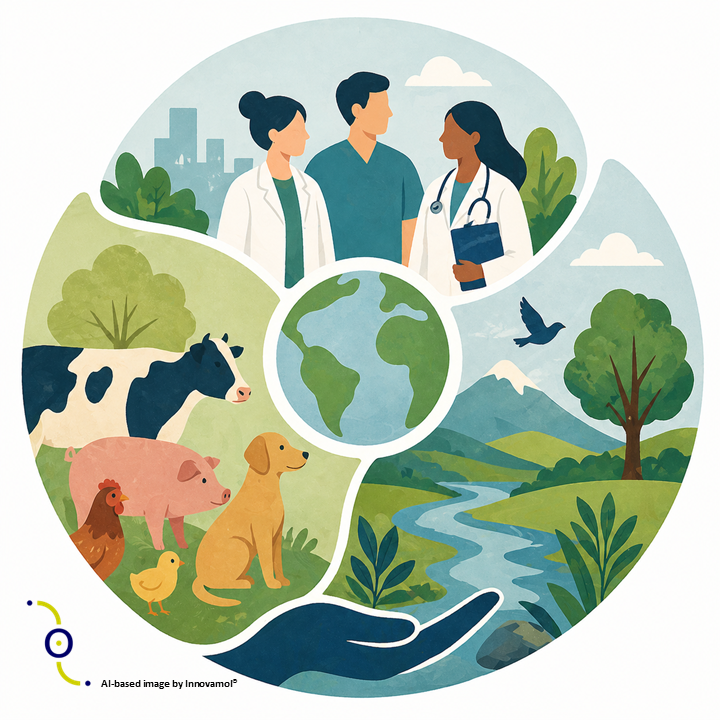
The concept of One Health recognises that human health, animal health, and the environment are deeply interconnected. Risk assessment within this framework moves beyond traditional, fragmented approaches and instead embraces a more holistic perspective. By considering how diseases, food safety, and other hazards move across species and ecosystems, it becomes possible to better anticipate and manage complex risks that would otherwise remain overlooked.
In recent years, the importance of this integrated approach has become increasingly clear. Zoonotic diseases, antimicrobial resistance, and environmental degradation all illustrate how closely linked these domains are. It is estimated that around 60 percent of emerging infectious diseases are zoonotic in origin, highlighting the need for coordinated surveillance and response across sectors. A pathogen emerging in wildlife can spread to livestock and humans, while environmental changes such as climate shifts or pollution can alter patterns of exposure and vulnerability. A One Health risk assessment seeks to capture these interactions, ensuring that decisions are informed by a comprehensive understanding (https://doi.org/10.1371/journal.ppat.1010537).
Implementing such an approach requires collaboration across disciplines. Public health experts, veterinarians, environmental scientists, and policy makers must work together, sharing data and specific knowledge. This can present practical challenges, particularly where data standards differ or where communication between sectors is limited. However, advances in data integration, modelling tools, and surveillance systems are making it increasingly feasible to bridge these gaps and generate more robust assessments.
Another key aspect is the inclusion of environmental drivers in risk evaluation. Factors such as land use change, biodiversity loss, and water quality play a critical role in shaping health outcomes. By incorporating these elements, risk assessments can move from reactive responses to more proactive strategies. This not only improves preparedness for emerging threats but also supports long term resilience in both human and animal populations (https://doi.org/10.1038/s41586-020-2562-8).
From a regulatory and policy perspective, the One Health approach offers a pathway towards more coherent and effective governance. It encourages the alignment of standards across sectors and promotes interventions that deliver multiple benefits. For example, reducing environmental contamination can simultaneously protect ecosystems, improve animal welfare, and safeguard human health. This integrated perspective is particularly valuable in addressing global challenges where isolated actions are unlikely to succeed. This integrated perspective is particularly valuable in addressing global challenges. Although isolated interventions may successfully address a specific issue, they may overlook cross-sector trade-offs, unintended consequences, and opportunities to identify solutions that provide the greatest overall benefit to human, animal, and environmental health.
Looking ahead, the continued development of One Health risk assessment will depend on sustained investment in interdisciplinary research and capacity building. Strengthening collaboration, improving data sharin and, more in general, fostering the concept of integration will be essential. As the complexity of global health risks continues to grow, adopting a One Health perspective is not more an option but an increasingly necessity towards informed and effective decision making.
“Everything is connected to everything else” – Leonardo da Vinci