Access to up-to-date scientific information is a fundamental requirement for research, regulatory science, and innovation. Among the tools that support this process and our daily work, PubMed is one of the most widely used databases for biomedical literature. Managed by the U.S. National Library of Medicine, it provides structured access to millions of peer reviewed articles and is a standard entry point for literature searches worldwide.
Recent developments affecting the U.S. National Institutes of Health have raised questions about how stable and continuous this system really is. The NIH is the main public funder of biomedical research in the United States, and changes in its funding and operations can influence not only how research is produced, but also how it is indexed and accessed. Over the past year, several reports have highlighted disruptions in NIH funding flows, including delays in grant allocation and broader administrative changes. These issues have had direct consequences on research activity, but they have also indirectly affected the systems connected to it. In some cases, oversight bodies have raised concerns about the scale and legality of these delays.
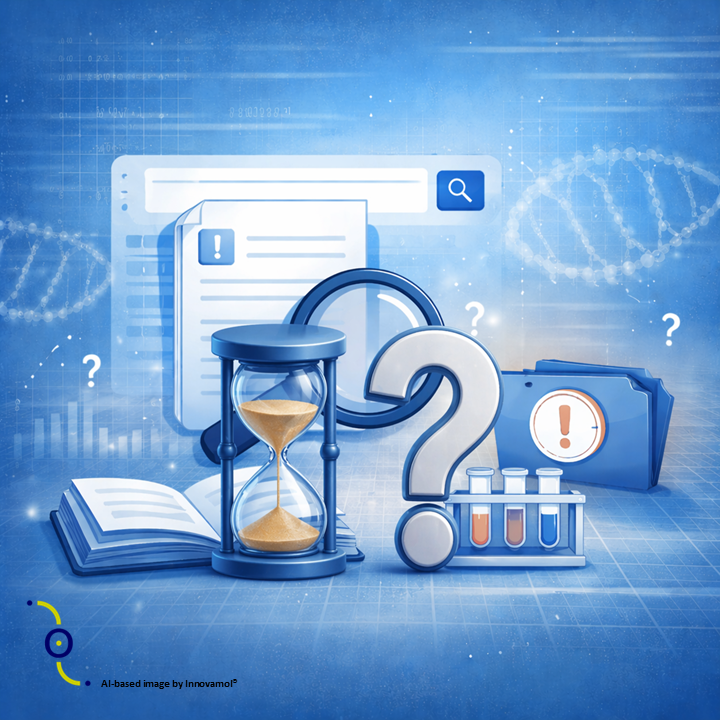
PubMed itself has not been shut down, and it remains fully accessible. However, its behaviour during periods of disruption reveals an important detail. The system continues to run, but not all of its functions operate at the same level. During federal shutdown conditions, PubMed has been shown to rely mainly on automated processes, while the indexing of new content slows down or temporarily stops. This means that recently published articles are not immediately integrated into the database (https://www.bmj.com/content/391/bmj.r2158).
This is a critical point. PubMed is often treated as a complete and current representation of scientific knowledge, but in reality, it depends on continuous human and technical input. When indexing pipelines are interrupted, the database becomes temporarily incomplete, even if it appears fully functional to users. The impact of this is not always obvious, but it is significant. searching for recent publications may not retrieve the latest studies, especially in fast moving fields where publication rates are high. This can affect ongoing research, risk assessments, and evidence-based decision making.
For organisations working with structured literature analysis, such as us in Innovamol, the implications are even more concrete. Literature searches assume that databases are both comprehensive and current. If new studies are missing, even for a limited period, the resulting datasets may be biased towards older information. This can influence the outcomes of reviews, reduce confidence in conclusions, and require additional verification steps. There is also a methodological aspect to consider. Scientific workflows rely on reproducibility and traceability, especially if the main use of the search is regulatory. If a search performed today does not return the same results as a search performed later, due to delayed indexing rather than new publications alone, this introduces an additional layer of uncertainty that is often overlooked.
AI-driven literature analysis platforms, such as Semantic Scholar, Perplexity or Consensus rely on structured metadata and indexed records from databases like PubMed to retrieve, rank, and summarise scientific publications. When indexing pipelines are delayed, these systems operate on an incomplete corpus of documents. This can lead to gaps in retrieved evidence, biased relevance ranking, and summaries that do not reflect the most recent findings.
It is important to place this situation in a broader context. PubMed is part of a larger ecosystem that includes NIH funded research, publisher workflows, and repositories such as PubMed Central (https://en.wikipedia.org/wiki/NIH_Public_Access_Policy). Disruptions in one part of this system can propagate through the others, affecting not only research production but also its visibility. This does not indicate a failure of PubMed as a system. Instead, it highlights how dependent even well-established scientific infrastructures are on continuous support and maintenance. What appears to be a stable and always available resource is a dynamic system that can be affected by external factors.
For researchers and organisations relying on literature data, this situation reinforces the need for awareness and methodological caution. Checking multiple sources, recognising potential delays in indexing, and critically evaluating the completeness of search results are increasingly important steps. It also underscores the importance of maintaining informed human oversight throughout the research process, since even highly capable AI systems may not reliably detect these gaps or account for their downstream implications. PubMed remains a key tool for scientific research. However, recent events show that access to knowledge is not only about availability, but also about timing. Even small delays in how information is indexed and retrieved can have measurable effects on how regulatory science is conducted and applied.We at Innovamol are committed to systematically verifying all the factors that may affect literature searches, applying structured protocols such as LitSearch® to strengthen the completeness, reliability, and regulatory relevance of the evidence base.
“The greatest enemy of knowledge is not ignorance, it is the illusion of knowledge” – Stephen Hawking